VGR Application Overview
Vision-Guided Robotics (VGR Vision-Guided Robotics is an In-Sight Spreadsheet feature that uses machine vision to guide robot motion through Robotics String Functions and VGR commands.) applications use machine vision results to dynamically guide robot motion, enabling robots to accurately interact with parts even when their position or orientation varies.
Typical VGR applications include inserting connectors onto substrates, mounting parts into housings, and loading or unloading parts from test machines. These applications are commonly implemented as guided pick or guided place workflows.
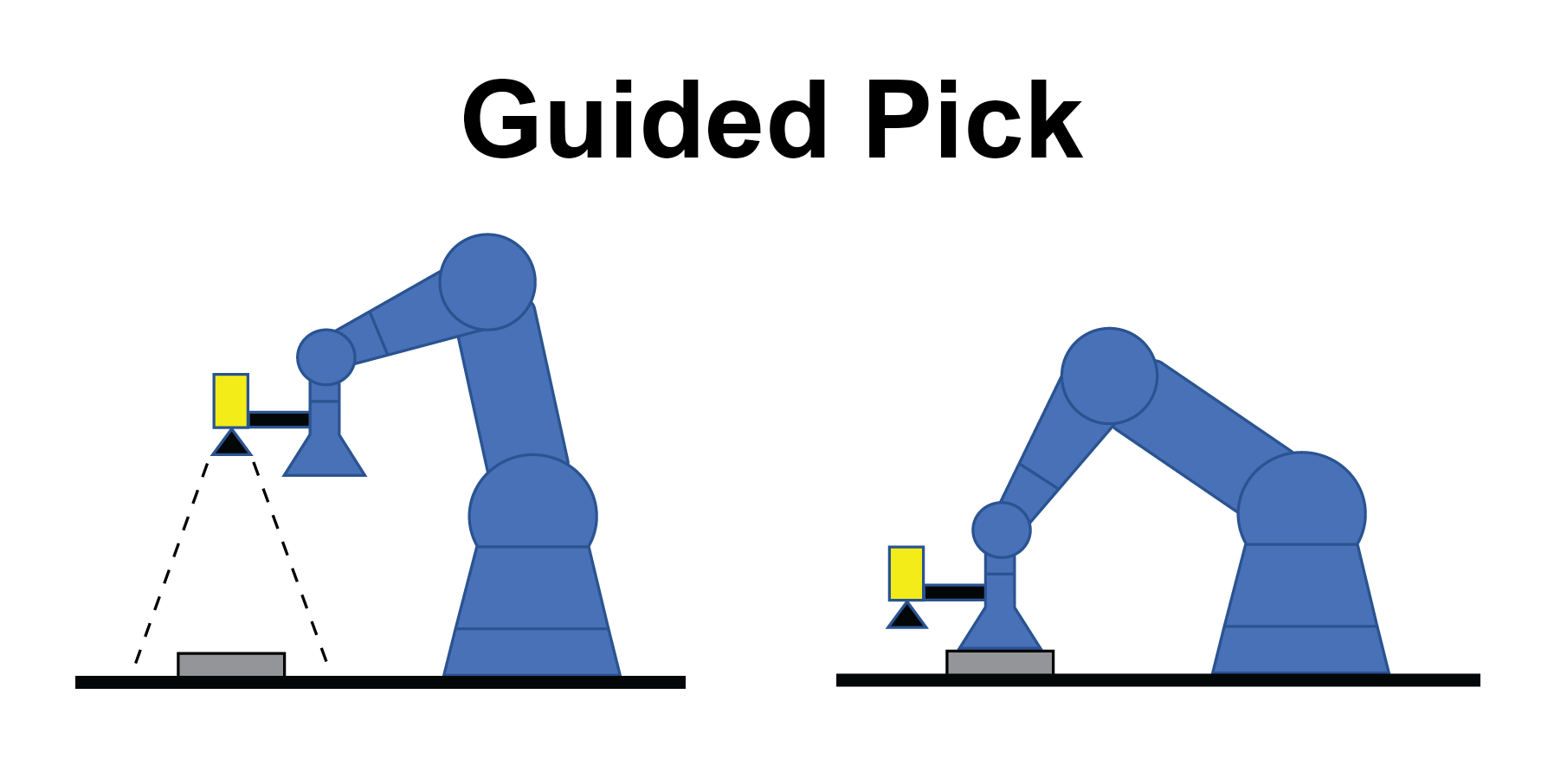
In a guided pick workflow, parts are presented in arbitrary positions and orientations within the field of view (FOV) of the vision system. The vision system locates each part, determines its position and orientation, and calculates the required robot pose based on a trained alignment between the robot arm and a reference part. The vision system sends the calculated pose to the robot controller, allowing the robot to pick the part accurately despite variations in placement.
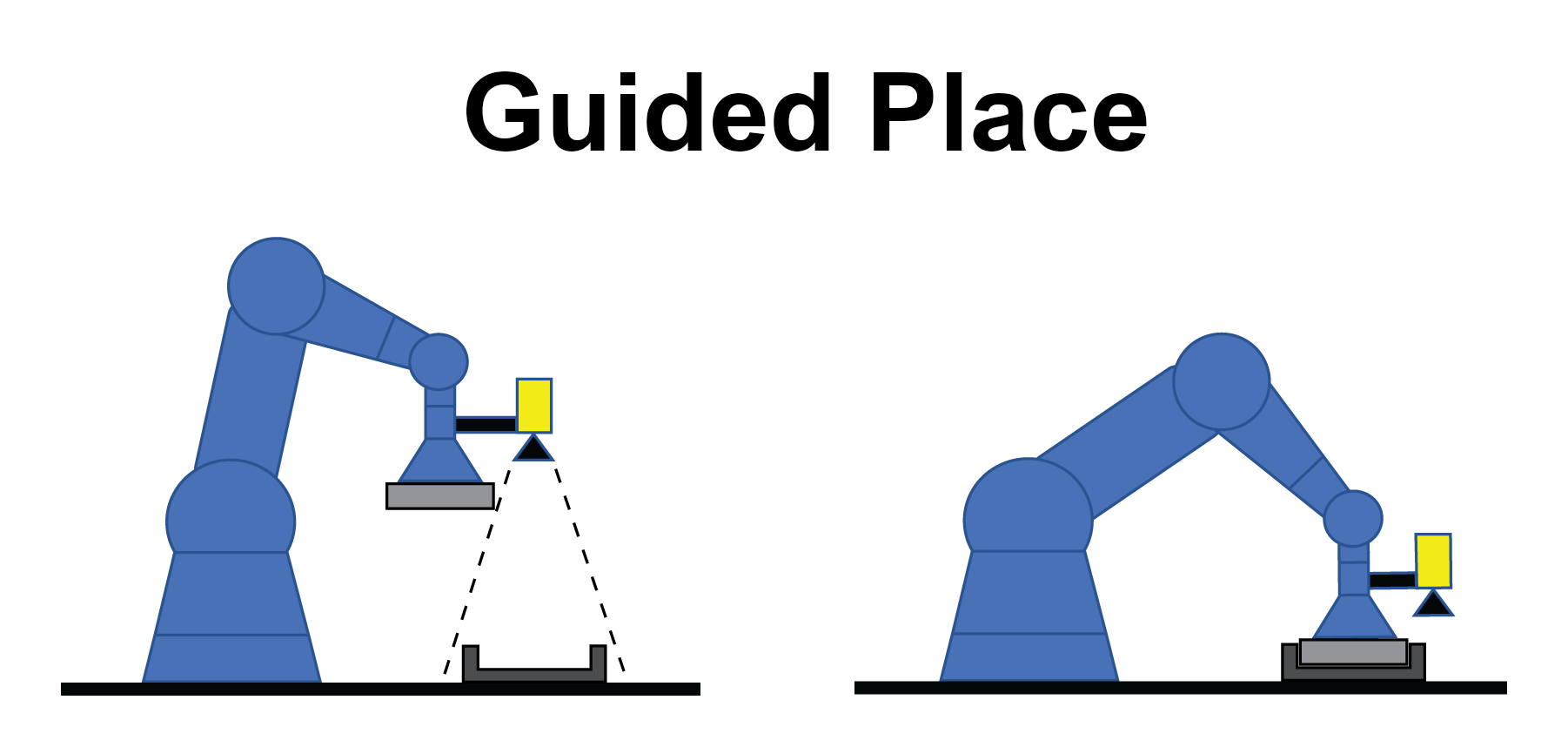
In a guided place workflow, the robot arm holds a part in a known, fixed relationship to the end effector and must place it at a specific target location, such as onto a tray, fixture A fixture is a coordinate location on the image that keeps the tool in the place determined by the fixture., or into an opening. The vision system identifies the target location in the field of view, and calculates the required robot pose based on a trained alignment between the robot holding the part and the target reference. The vision system sends the calculated pose to the robot controller, allowing the robot to place the part accurately despite variations in placement.
Both guided pick and guided place workflows rely on a common process for aligning robot motion with vision results. This process combines pose training, runtime alignment, and robot communication commands to ensure that calculated vision results are translated into accurate robot motion.