Audit Logging
The Audit Logging utility allows you to track jobs and system level changes and enable traceability and accountability for modifications made to the vision system.
The following actions in In-Sight Vision Suite trigger audit logging events:
| Changes in the Spreadsheet Editor | System changes | Changing complex tools | Changing utilities |
|
|
|
|
To use audit logging:
-
Launch In-Sight Vision Suite if it is not already running.
-
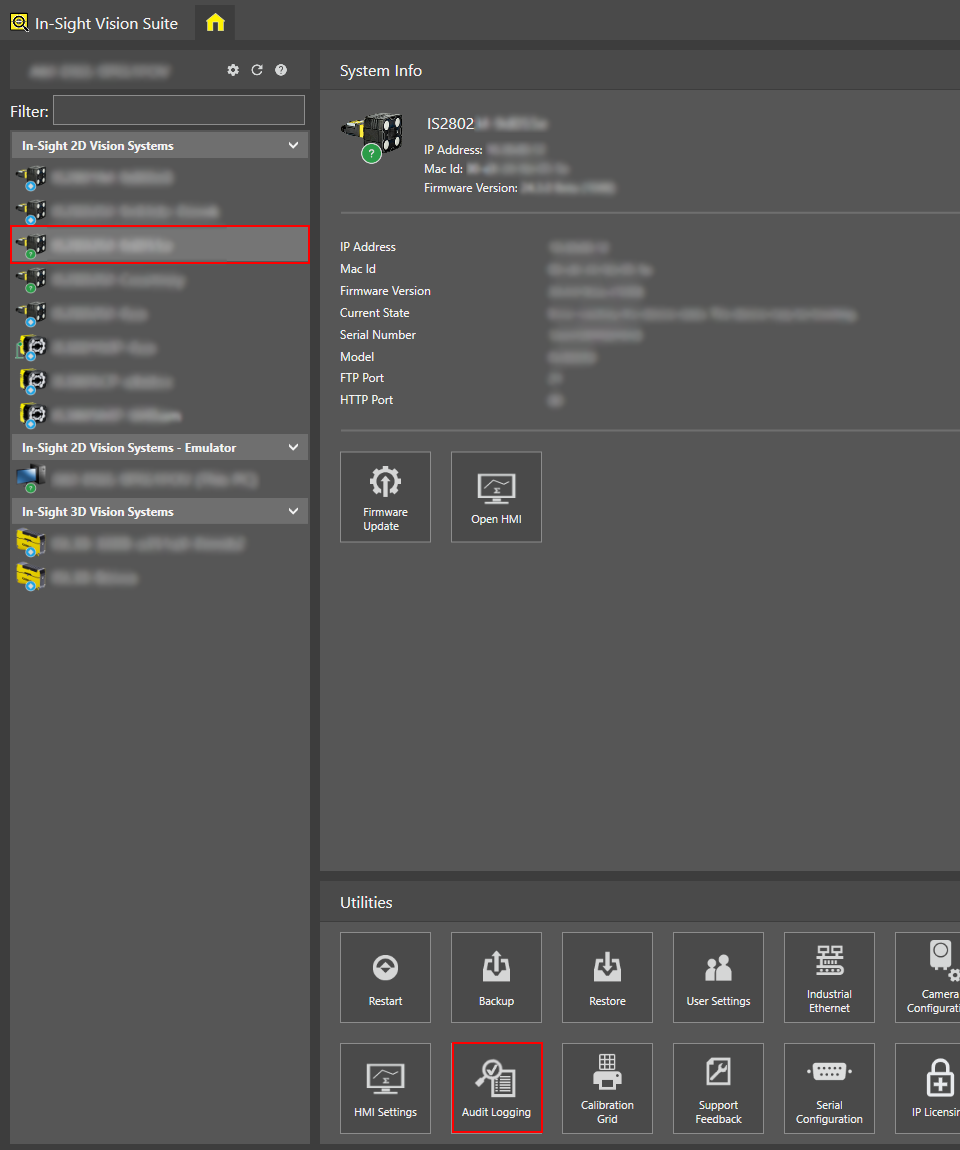
Left-click the device you want to configure on the In-Sight® Device Pane on the left. The list of Utilities applicable to the selected vision system then appears at the bottom of the window.
-
Click Audit Logging.
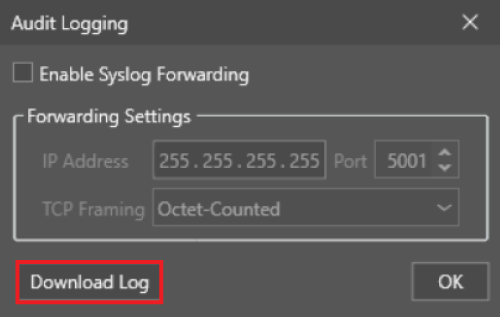
The Audit Logging window appears.
-
Retrieve the audit log by doing one of the following:
-
Download the audit log by clicking Download Log.
-
Click Enable Syslog Forwarding to enable sending the audit log to a remote server.
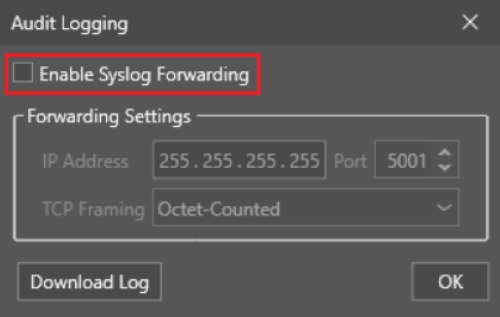
After setting up the IP address and the port number, open the TCP Framing dropdown and select the TCP framing option to use:
-
Octet-Counted (default): each message is prefixed with its length in bytes, followed by the message. Preferred for Linux-based syslog servers.
-
Traditional: messages are delimited by a newline character (\n). Preferred for Windows-based syslog servers.
Note: In-Sight Vision Suite uses syslog forwarding protocol to store audit log records. You need to set up a syslog server for collecting audit records. -
-
-
Click OK.