AI Tools
Each AI tool is a neural network model Each AI tool is a neural network model. A neural network model mimics the way biological neurons work in the human brain. The neural network model consists of interconnected layers of artifical neurons, called nodes, and they have multiple layers. Neural network models excel at tasks like image classification and pattern recognition. designed to solve different hard to program machine vision challenges through artificial intelligence. You can create one or more instances of each tool, so you can create many neural network models and train them in a single project In OneVision, a project is a collection of images and vision tools that performs different tasks, such as inspection, measurement, or identification..
For example, to catch defects from a set of images, you can train multiple Segmenter tools, each trained with different neural network parameter settings.
-
 Locator
 -
 Segmenter
 -
 Classifier
 -
 Anomaly Detector
The Locator tool identifies and locates specific features or groups of features in an image. Use the Locator tool to label the features and train the model. The trained model generates predictions of where the features are located based on the labels. If there are multiple classes, the tool also predicts the class of each feature.
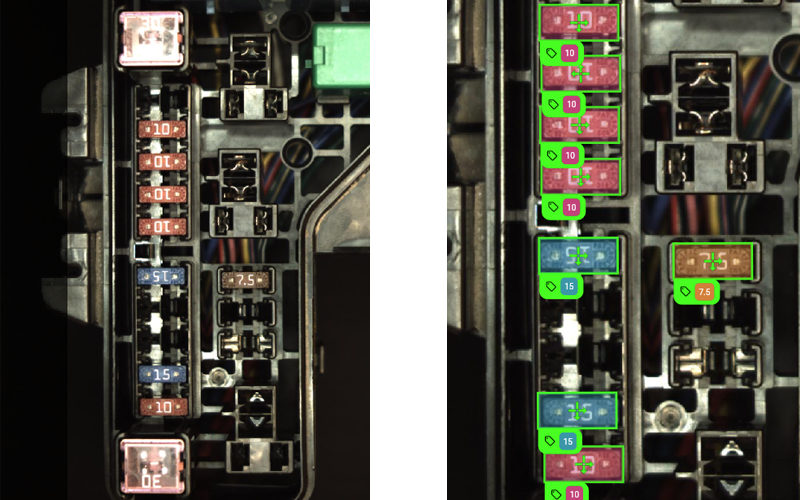
Image segmentation identifies distinct features (regions) in an image by analyzing pixels. The Segmenter tool generates contiguous pixel regions (blobs) for each distinct feature.
Mark the feature you want the Segmenter tool to find using the various Label tools. After training, the tool can predict the appearance of the features in the new images.
Use the Classifier tool to identify and classify the objects in your images. Once trained, the tool returns a predicted class and a confidence score for unseen images.
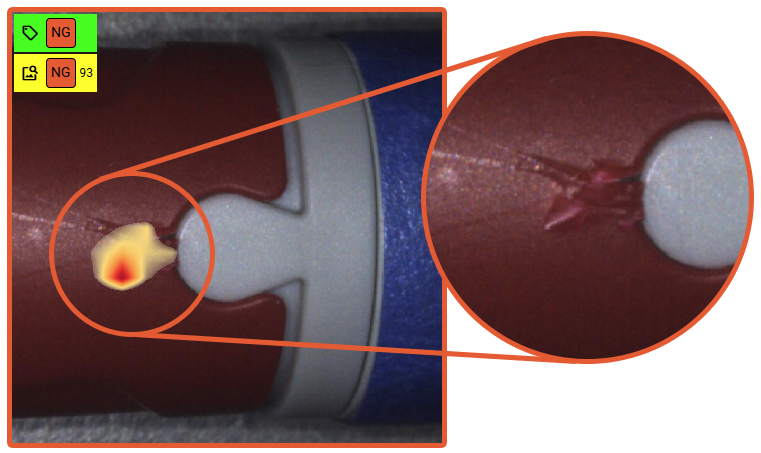
The Anomaly Detector tool recognizes defects, debris, or other faults. Use the Anomaly Detector tool to identify unknown or unanticipated defects on your inspected parts.
The Anomaly Detector tool can perform tasks such as:
-
Detecting anomalies and aesthetic defects by learning the normal appearance of an object
-
Recognizing scratches on complex surfaces
-
Identifying incomplete or improper assemblies